


Natural Intelligence,
Spatial Clarity
Digital twins and spatial intelligence systems for complex landscapes.
We translate survey-grade LiDAR and reality capture into interactive digital twins, environmental simulations, and permit-ready deliverables — empowering organizations to understand, design, and steward the land with spatial clarity.
The Force Multiplier
We operate as a technical mapping partner to licensed professionals, reducing friction and increasing capacity.

Clarity out of Complexity
Transforming dense, layered geospatial systems into legible information. We reduce the cognitive burden of high-stakes decision-making — delivering rigorous technical insight in a form that is nimble, usable, and designed to lighten the weight of complex land management.
Spatial Intelligence
Applying mapping and analysis to establish strategic foresight for long-term land-use and stewardship. Every dataset we capture becomes a living spatial intelligence system — not a static report, but an interactive environment for planning, simulation, and stakeholder communication.

Absolute Confidence
Bridging the physical and digital worlds to turn raw site data into permit-ready CAD drafting, immersive 3D digital twins, and compelling visual narratives for informed decision-making.
Core Capabilities

Geospatial Mapping & Capture
High-density aerial LiDAR scanning, full-frame photogrammetry, and RTK GNSS data collection — producing high-resolution orthomosaics and precise environmental baselines.
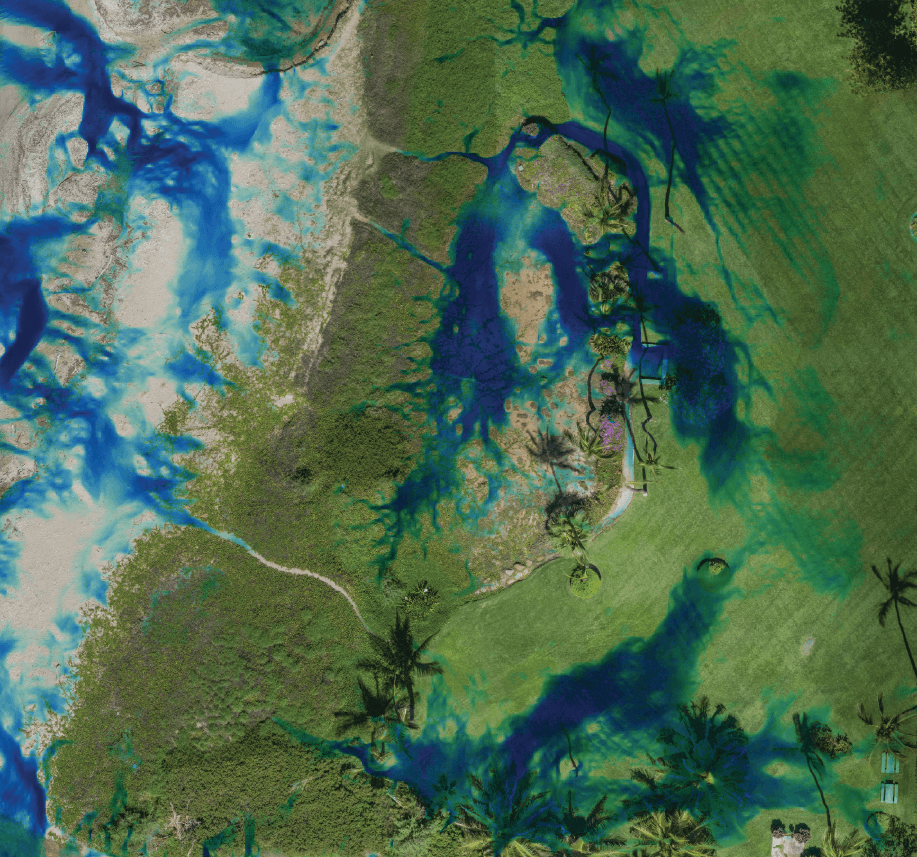
Environmental & Hydrologic Modeling
Watershed delineation, fluid simulations, and structural inundation modeling to predict site performance under extreme conditions.
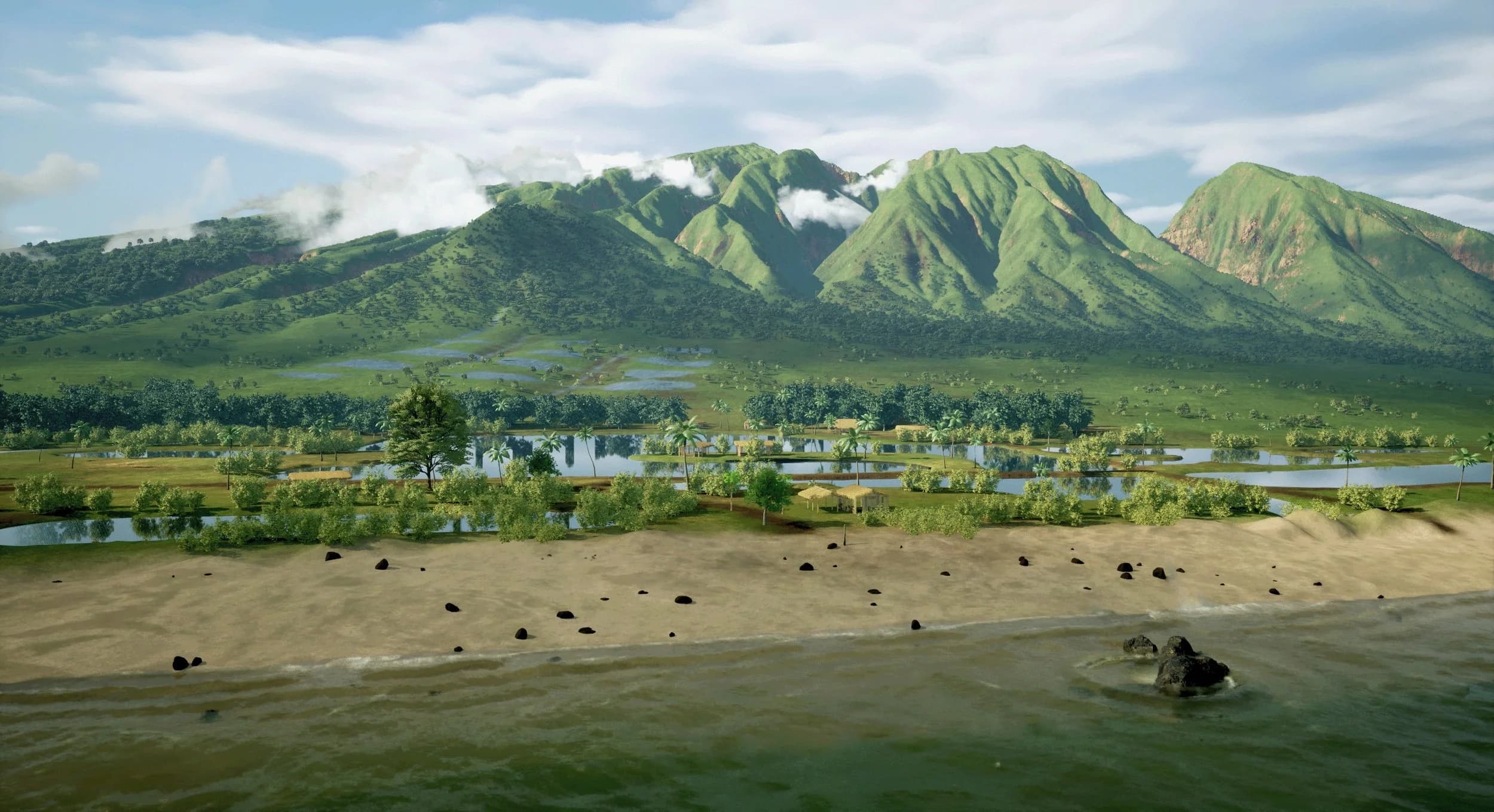
Site Planning & Digital Twins
Site master planning, Landscape Information Modeling (LIM), interactive 3D sandboxes, and CAD layout — turning terrain data into actionable design intelligence.

Enterprise Deliverables
Permit-ready CAD deliverables, high-resolution georeferenced orthomosaics, major/minor contour lines, point clouds, and mesh models engineered for AEC professionals.
Geospatial Communications
Translating technical site intelligence into stakeholder presentations, grant applications, and digital publications that advance your project with any audience — funders, regulators, or community.
From Terrain to Intelligence
Survey-grade capture through AI-assisted processing to permit-ready deliverables — every step traceable, every output actionable.

Site Reality Capture
Survey-grade aerial LiDAR establishes a centimeter-accurate (1–5 cm) digital baseline of the site — penetrating dense vegetation to expose the true bare-earth surface beneath. Full-frame photogrammetry is deployed where terrain is open, delivering high-resolution orthomosaics with exceptional efficiency.
1 / 5 images — scroll to browsePoint Cloud Generation
Elevation Classification
Data Prep & Processing
LiDAR Intensity Analysis
Canopy Penetration
Bare-Earth Extraction
TIN Mesh + Contours
Hydrologic Simulation
Change Detection
Integrated Map Views
Tangible Deliverables
Real-world examples of our data outputs, engineered for frictionless integration.

Explore the intelligence domains and workflows behind these deliverables.
Measurable Impact
How our spatial intelligence translates into tangible confidence and accelerated timelines.
"The geospatial presentation Levity created for our shoreline project was the deciding factor for our funder—transforming complex coastal data into a clear visual narrative that secured private funding."
"Levity’s geospatial services—from LiDAR and elevation modeling to real-time Unreal Engine simulations—were instrumental in showcasing our work across multiple projects. Their expertise provided the high-fidelity data and interactive visuals we needed to clearly communicate our sites and build compelling investor-facing narratives."
"Working with Levity has been a valuable part of our rebuild efforts—from accurate plot plans to ramp drafting and design support, along with guidance through the permitting process, helping us continue providing safe housing for those in need."
"Levity’s precision in drafting plot plans and supporting revisions throughout the permitting process has been instrumental in our work on Lahaina’s home rebuild efforts following the 2023 fires. Their spatial insight provided the clarity needed to move forward with confidence in a complex recovery environment."
"Levity brought their full end-to-end spatial intelligence stack to our site—from high-resolution LiDAR capture to interactive 3D terrain analysis and simulation. Their approach gave us a completely new lens for stewardship decisions."
"Levity Creations delivered a comprehensive dataset combining aerial and SLAM LiDAR, DEMs, and hydrologic flow analysis, along with a clear presentation that allowed us to understand and apply the data. Integrating surface data with mapped subsurface environments provided critical insights—confirming heavy machinery could operate safely without risk of collapse."
Frequently Asked Questions
Clarity on our processes, deliverables, and how we integrate with your team.
How does LiDAR differ from standard drone photogrammetry?
While photogrammetry stitches together 2D photos to create 3D models, it often struggles with dense vegetation. Aerial LiDAR shoots laser pulses that penetrate through canopy gaps to hit the true bare earth. This allows us to generate highly accurate topographic maps and structural models regardless of ground cover.
What file formats do you deliver for CAD integration?
We deliver industry-standard formats ready for use in your existing workflow. This includes clean, continuous contour lines (.DWG / .DXF), classified .LAS point clouds, and optimized 3D meshes — all in file types compatible with Civil 3D, Revit, AutoCAD, ArcGIS, and standard AEC platforms.
How do you incorporate the Ahupuaʻa system into your modeling?
We take a 'Summit to Sea' approach to spatial intelligence. This means our hydrologic and environmental models don't just stop at property lines. We analyze the broader watershed context, tracking how upland activities and water flows impact coastal resilience, ensuring sustainable and place-based design.
Can these models be used for interactive design review?
Absolutely. Along with static CAD deliverables, we build interactive 3D digital twins using Unreal Engine — allowing stakeholders to virtually walk the site, test sightlines, and run "what-if" scenarios before breaking ground. These immersive environments are especially effective for design review, client presentations, and regulatory communications.
How long does a typical site capture and processing take?
While it depends on the site's scale and complexity, a standard data capture generally takes 1-2 days on-site. The processing, classification, and delivery of production-ready CAD files and digital twins usually takes an additional 1-2 weeks.
What is a Digital Twin and how does it differ from a 3D model?
A Digital Twin is more than a static 3D model — it's a living, interactive virtual representation of a real-world landscape. While a 3D model captures how a site looks, a Digital Twin integrates terrain, vegetation, hydrology, and environmental data layers to simulate how a landscape functions and evolves. Stakeholders can explore the twin interactively, run 'what-if' scenarios, and visualize decades of landscape change before any work begins.
What industries and professionals do you serve?
We serve land developers and civil engineers facing unknown terrain constraints, licensed surveyors needing high-density LiDAR acquisition for complex sites, restoration and conservation practitioners demonstrating project impact to funders, and agroforestry or regenerative agriculture planners designing multi-layered growing systems. Our survey-grade data integrates directly into existing AEC workflows.
Ready to Partner With Us?
Request a site feasibility visualization, partner with a local LiDAR expert, or explore our interactive Digital Twin portal — let's discuss how spatial intelligence can serve your project.